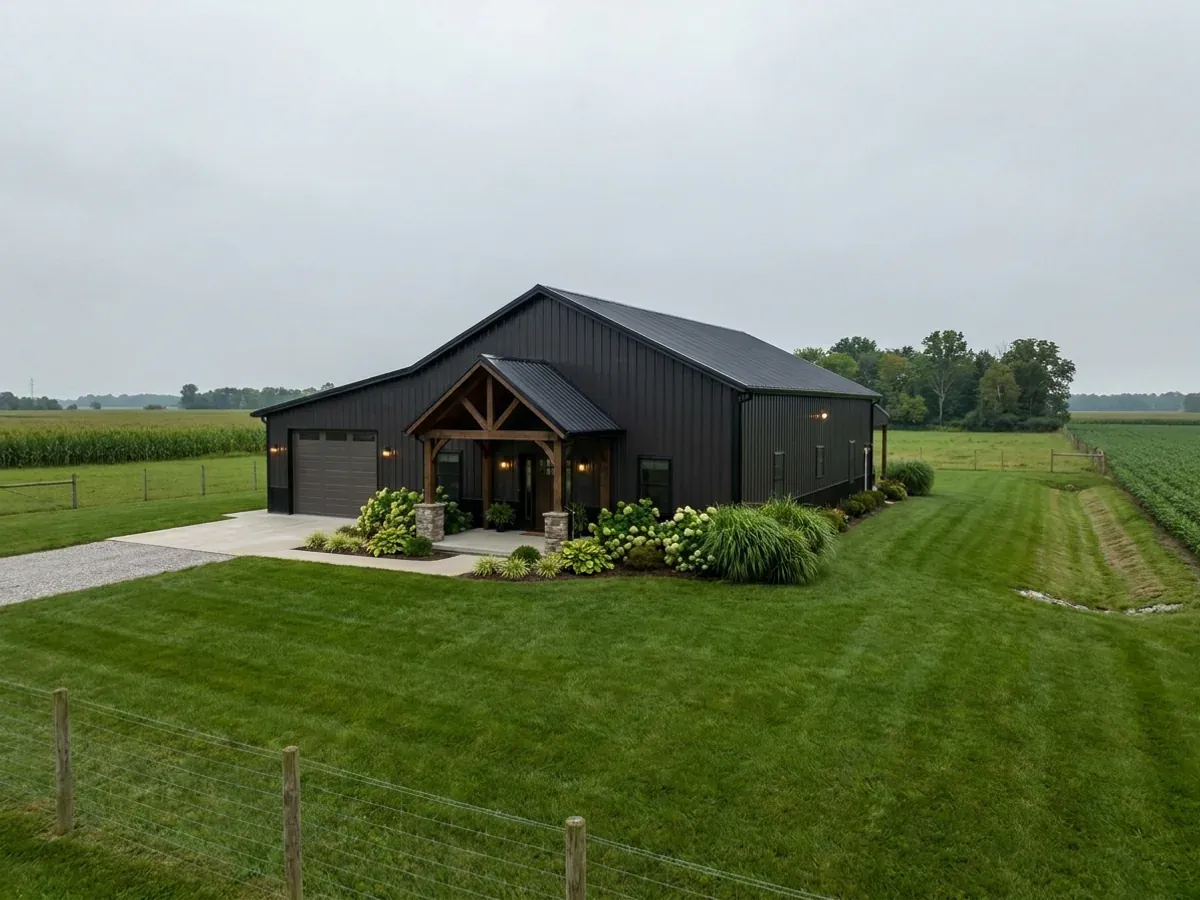
Turnkey Builds in Ohio
A turnkey barndominium means you sign one contract and deal with one builder from the first site visit to the day you get the keys. We handle the drawings, the zoning and permit paperwork, the site work, septic and well coordination, the shell, and every trade inside it, and we schedule all of it so nothing waits on a phone call you forgot to make. If you have been searching for barndominium builders near me and finding shell-only kit sellers, this is the other option: a finished home, not a pile of steel on a slab. The scope, the schedule and the price go into one written contract, and we build to the Residential Code of Ohio whether or not your parcel has an inspector.
Turnkey Builds: how the work runs
Four stages, in this order. The sequence matters more than it looks: getting engineering and permitting settled before anything is fabricated is what keeps a build from stalling.
Land, zoning and a budget you can defend
We start on your land, or on the parcel you are thinking of buying. We check who zones it, whether a building department certified for residential work covers it, and what the local health district will want for septic and well. Then we size the home to your budget with you: square footage, shop space, finish level and site costs, line by line. You leave the first meeting knowing what the build involves and what drives its cost, before you have paid for drawings.
One written contract for the whole job
Before anything is ordered, the whole job goes into one written contract: what is being built and with which materials, what the price includes and what it leaves out, the start date and completion period, and how payments line up with your construction loan's draw schedule. We go through it with you line by line before you sign, so there is nothing in it you have not had explained.
Barndominium builders who run every trade
Once drawings are approved we order the building package and run the job: excavation and foundation, septic and well, the frame and shell, then electrical, plumbing, HVAC, insulation, drywall, cabinets and flooring. Trade work is done by contractors who hold whatever licence the work requires. Where a certified building department covers your land, we book every inspection; where none does, we still build to the Residential Code of Ohio.
Final walkthrough and keys
Before you move in we walk the house with you room by room and fix the punch list. Where a certified department has jurisdiction, the final inspection and certificate of occupancy come before handover. You get the keys, the paperwork, the warranty terms in writing and a single point of contact for anything that comes up after you move in.
What to check before you sign with any Ohio builder
Ohio does not issue a statewide general contractor or home builder licence, so the licence question most buyers ask first has no state answer here. That makes the contract the document that matters. Before you sign with any builder, read what it says about the scope of work and materials, what the price includes and what it leaves out, how change orders and extra costs are handled, the start and completion dates, and how payments line up with construction-loan draws. We walk you through every clause of ours before you sign, because a buyer who understands the contract is a buyer who can hold any builder to it.
Where we deliver turnkey builds
In Ohio the code is the same everywhere, but who enforces it is not. A city, a village, a township or the county may run the certified building department that reviews your drawings, and in some unincorporated areas none does. Township and county zoning, the health district that permits your septic system and well, and the frost depth and snow load your department publishes all change from one parcel to the next. We work out which of them apply to your land before anything is priced.
Serving clients across the entire region.
Every locality we build in has its own reviewer, its own fee schedule and its own filled-in design criteria. The service area pages set out what each one publishes.
What actually decides the price
Square footage is the number everyone leads with, and it is rarely the one that moves a barndominium budget. These four do.
-
Size, layout and finish level
Square footage sets the frame and the slab, but finish level moves a turnkey budget just as much: cabinet and countertop grade, flooring, trim, fixtures and how much of the shop side is finished. We price these as separate lines so you can see which choices carry the cost and trade them against each other.
-
Septic, well and utilities
On rural land the site services can be a large share of the budget. The local health district sizes a septic system by bedroom count, and the state rule is 120 gallons per day per bedroom with a 240-gallon minimum, so a fourth bedroom changes the system as well as the floor plan. A private well needs its own health-district permit, and the distance to power sets the cost of the service run.
-
Where the land is and who has jurisdiction
Frost depth and ground snow load are set by your local building department, not by the state, and they change the foundation and the roof framing. Whether a certified department reviews plans and inspects, and what zoning allows on the lot, both shape the schedule. Distance from our crews and suppliers matters too.
-
How the contract is structured
A firm-price contract and a cost-plus contract handle risk differently: one fixes the price for an agreed scope, the other passes actual costs through with an agreed fee. If you are financing with a construction loan, the draw schedule shapes when money moves. We explain both structures and set the draw schedule with your lender before anything is signed.
Turnkey Builds in Ohio: common questions
8 questions we get asked most often about building in Ohio. If yours is not on the list, ask it directly.
What does turnkey mean for a barndominium?
How do I choose between barndominium builders near me?
Do barndominium builders in Ohio need a state licence?
What is included in a turnkey price?
Do I need to own land before I talk to a builder?
What happens if the job costs more than the estimate?
Do you build turnkey barndominiums where there is no building inspector?
How long does a turnkey barndominium take to build?
Keep reading
The pages that answer the next question this one raises.
How Long Does It Take?
Census data on build duration, and why the permit clock depends on which of the three enforcement regimes your jurisdiction is in.
Read itHow to Finance a Barndominium
A single contract is also the structure lenders are most comfortable underwriting.
Read itBarndominium Cost Guide
Sourced ranges for the finished tier, so the quote has context.
Read itReady to put turnkey builds against a real plan? Start there and the rest follows.
Tell us about the land
Send the parcel ID or an address and we will come back with what can be built on it, the wind load it has to meet, and a realistic budget range. That conversation costs nothing.